|
|
| Home >
Places > Deeg Images |
Deeg Images |
| |
 |
| |
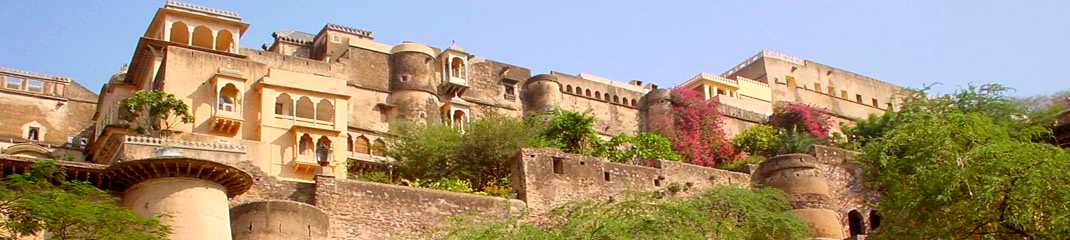
Located 34 kms from Bharatpur is the ancient town of Deeg. It finds mention in Skanda Purana as Dirgha or Dirghapura. The place is now known for its famous water palaces, gardens and
fountains. The famous old fortress of Deeg, which contributed substantially in the making of the Jat Principality, is now in shambles. Its formidable cannons now lie abandoned in the forlorn for.
Deeg was the first capital of the newly carved out Jat State, when Badan Singh was proclaimed its ruler in 1722. the royal palace, built by Badan Singh, on the southern side of the garden is now called as
Purana Mahal or the old palace. Deeg, because of its strategic location and proximity to Mathura and Agra was vulnerable to repeated attacks by invaders. In 1730, the Crown Prince Surajmal is reported to
have erected the strong fortress with towering walls, bastions, a deep moat & high ramparts about 20 feed wide, in the southern portion of the town. Although Surajmal shifted his capital to Bharatpur, his
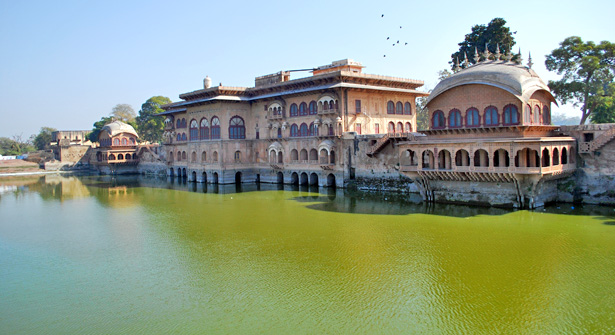
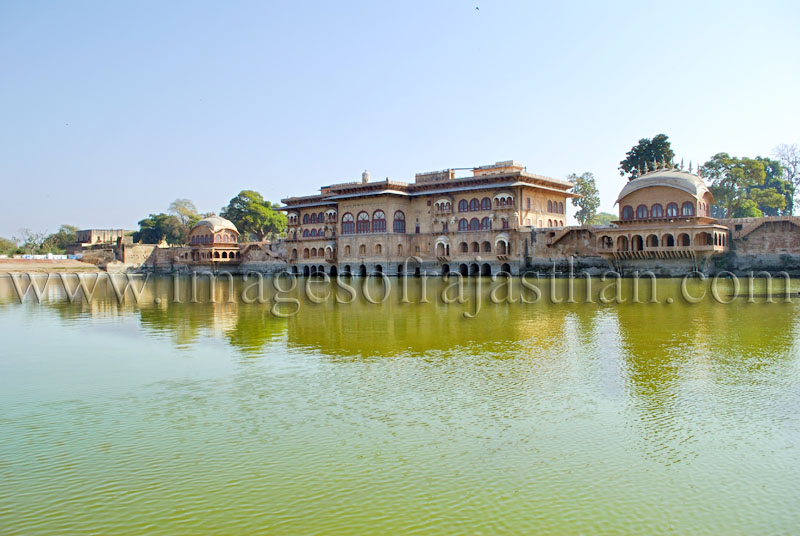
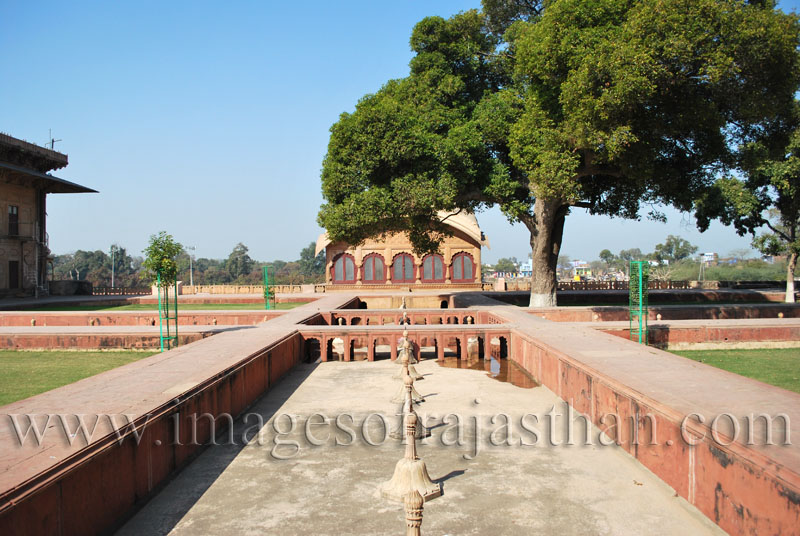
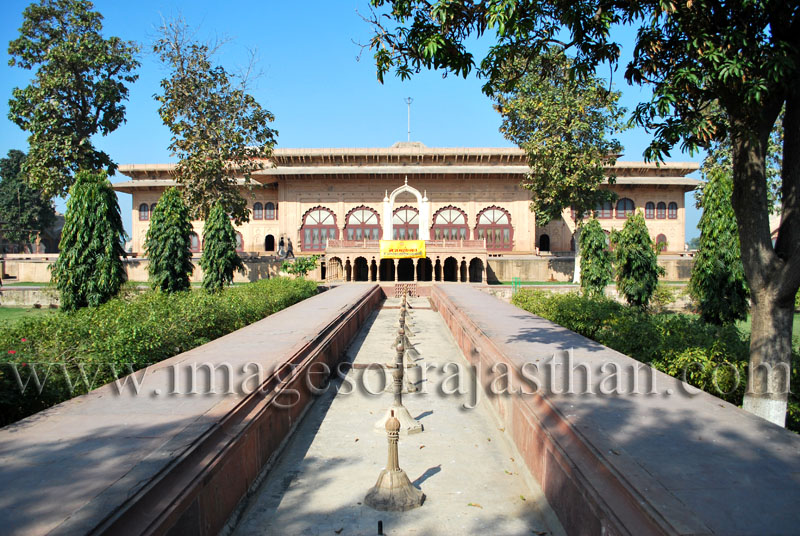
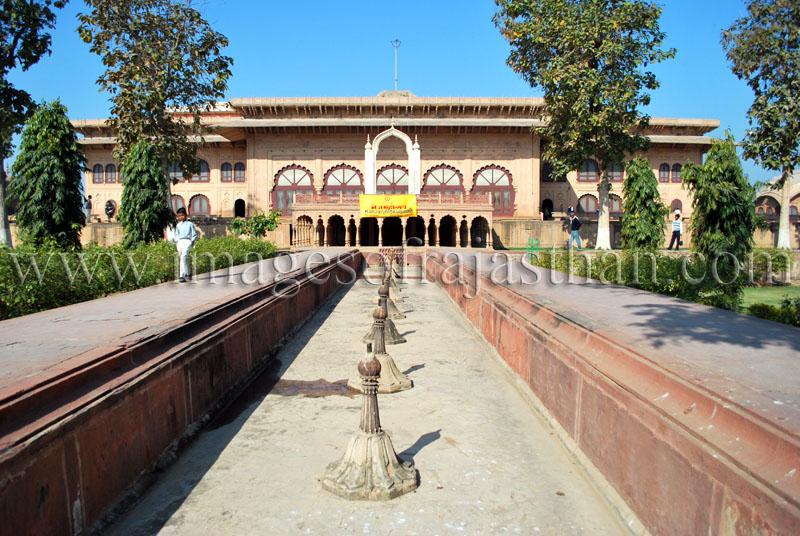
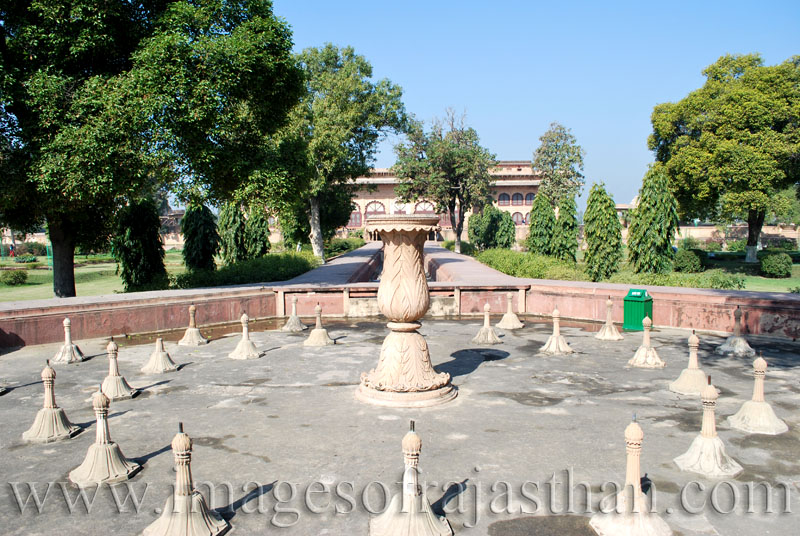
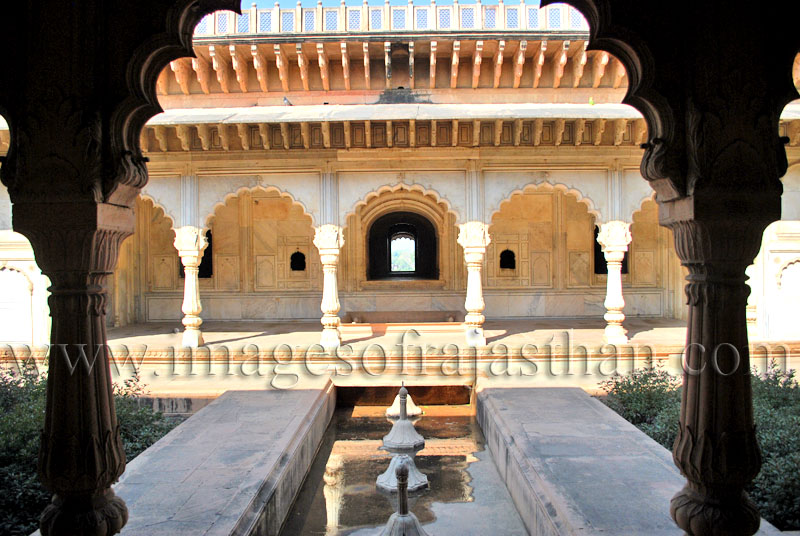
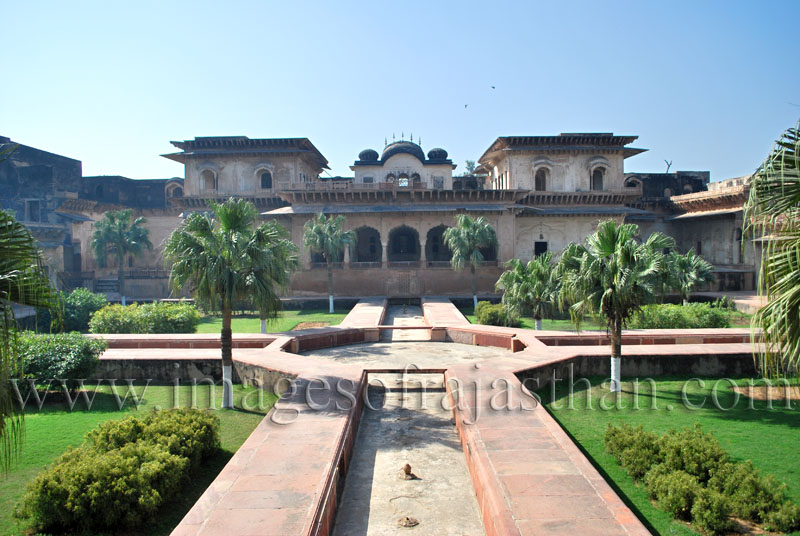
liking for Deeg did not diminish. He built elegant Bhawans clustered around a garden complex, with fountains in the front & enormous water bodies in the rear. The entire complex of palaces & gardens is a
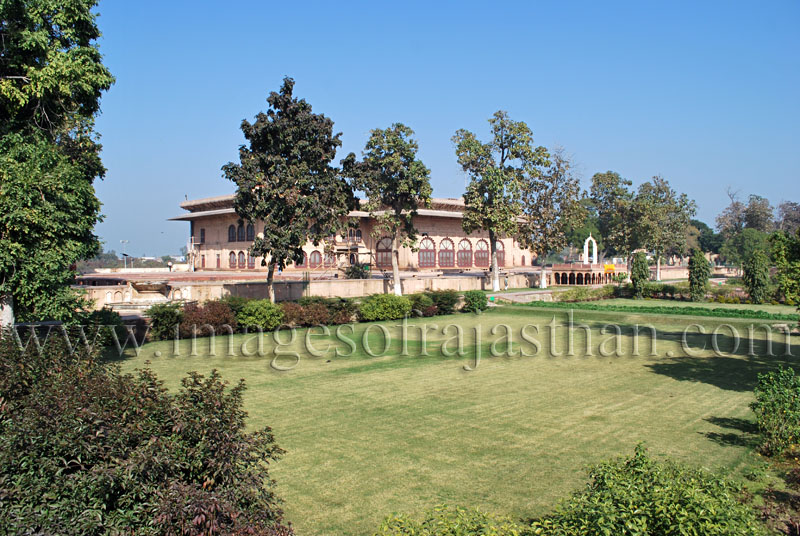
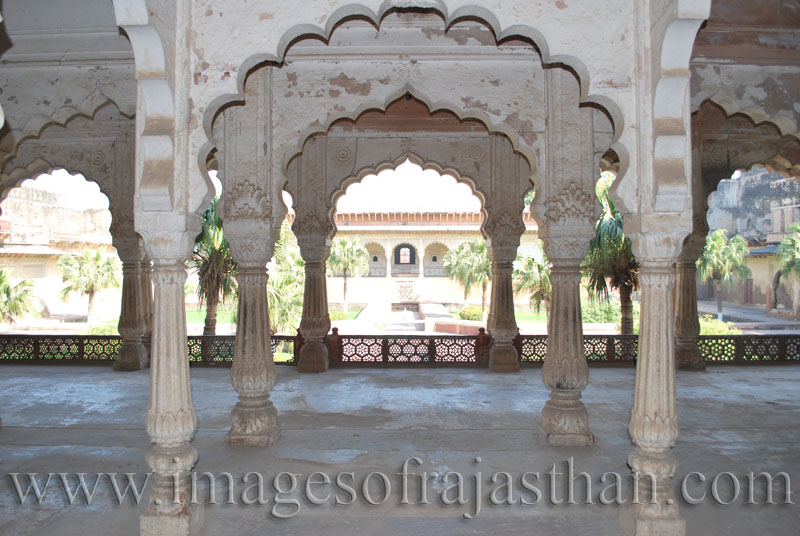
marvel of engineering skill. The elegance of design and perfection of workmanship of these palaces is not seen elsewhere in India. The palaces form a quadrangle, in the center of which is a garden, an
oblong space of 145 meters by 107 meters, laid out with flower beds and fountains. To the east & west are large masonry tanks, with another garden on the other side of the western tank beyond the
buildings, forming the quadrangle.
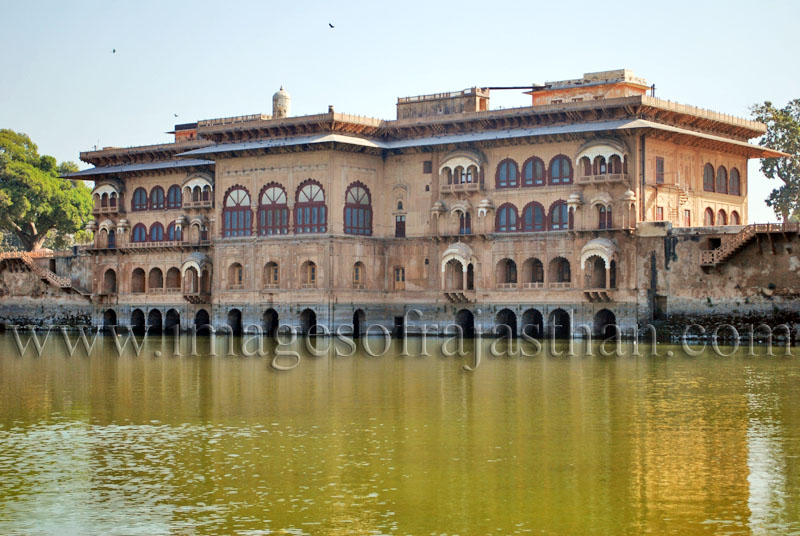
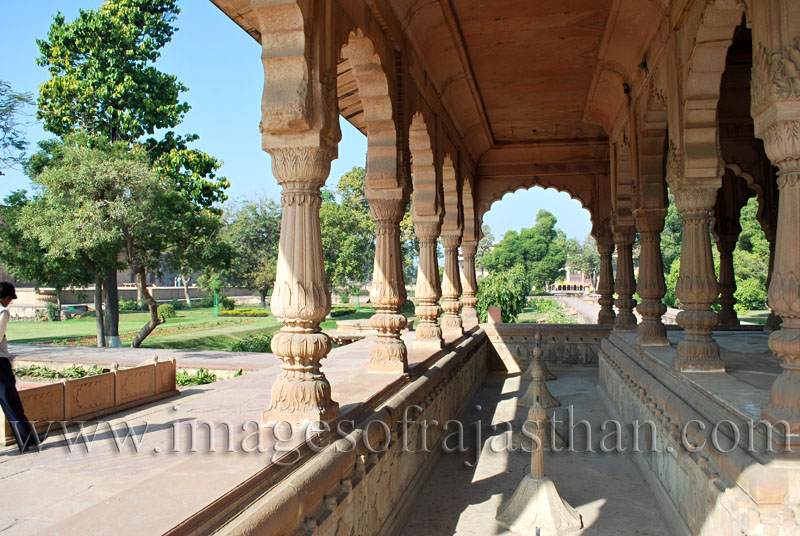
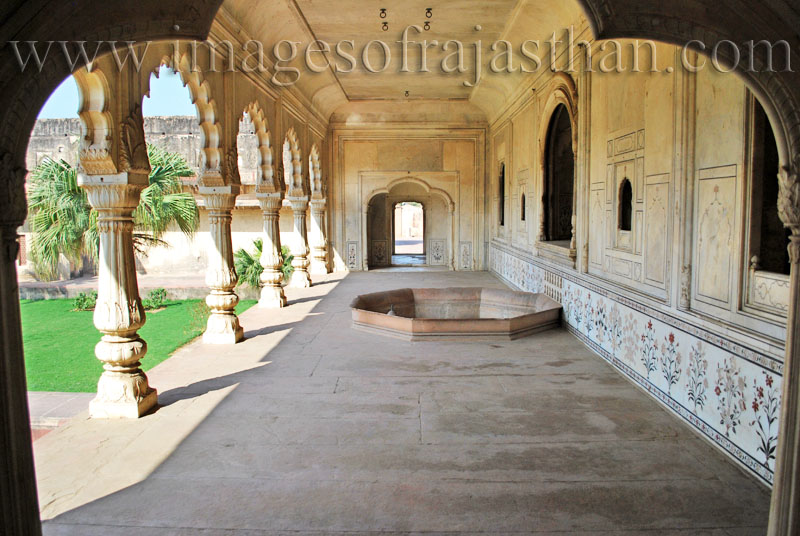
The building to the north is called the Nand Bhawan. The main building on the west is called Gopal Bhaan and is the largest of all Palaces. On either side of the Gopal Bhawan are two smaller buildings, called
the Sawan and Bhadon Bhawans. These buildings including the Gopal Bhawan command a view of the western tank and gardens beyond it. These three palaces, although single storey in the front, have in addition
two more floors at the bank. One of the storeys of these palaces is either partially or wholly submerged in water throughout the year. On the southern side of the quadrangle are two palaces facing north. Once
of them, Suraj Bhawan, is built entirely of marble and is tastefully ornamented with stones of different colours. The other palace, built of grey sandstone, is called the Kishan Bhawan. On the roof of this
palace is a large water reservoir which feeds the fountains spread all over the garden. The reservoir was filled with water from two large wells. The engineering skill of this foof to hild such an enormous
quantity of water has no parallel anywhere. James Fergusson in his History of Indian and Eastern Architecture says that the Deeg palaces have been built on a perfectly level plain and laid out with a
regularity that would satisfy the most fastidious renaissance architect. The palaces lack the massive character of the fortified palaces of Rajput States but in grandeur of conception and beauty of
details, they surpass them all. These bhawans are built along the four sides of Garden. The Jat rulers of Deef and Bharatpur were influenced by the grandeur of the Mughal courts of Agra and Delhi. They were keen
on making their palace better or at least equal to them. They brought all item like gates, stone slabs, beams etc. from Mughal areas and used them in the construction or decoration of the Palaces. A fine
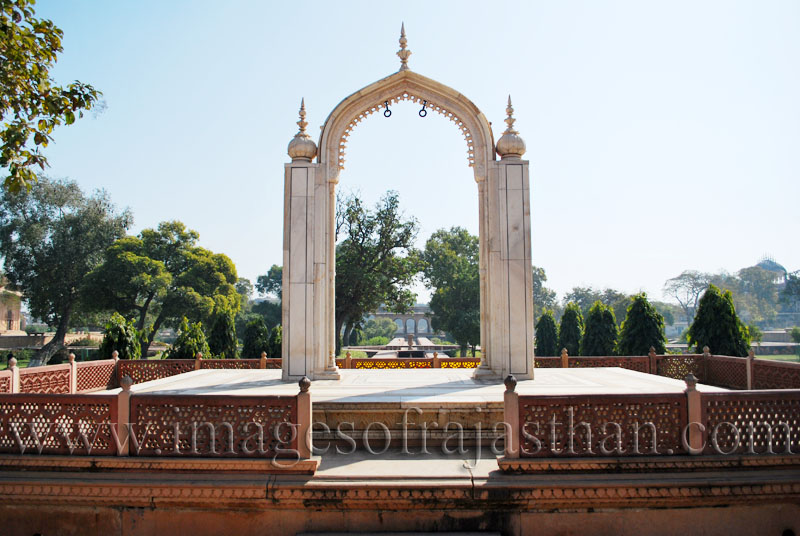
marble swing was brought here as a war trophy by Raja Surajmal from the Mughal court of Delhi. Similarly, the black marble throne installed in front of Gopal Bhawan is a trophy brought by Maharaja
Jawahar Singh, who in 1764 AD secured it on his victory over Delhi. |
| |
|
|
|
|
|
|
|